- Is saving 1,315 people 12 minutes a day worth $196.5 million?
- You don’t need a PLAN when you have Twitter.
- The EPA, the price of copper, and the car you drive.
- GM has had a few profitable quarters. The federal government still needs to divest from the auto industry, even if taxpayers take an immediate hit.
Cato at Liberty
Cato at Liberty
By almost all indications, former New York City schools chancellor Joel Klein knows first-hand the pernicious power of concentrated benefits and diffuse costs in government schooling. He knows how political control of schools is skewed mightily to the side of teachers’ unions, administrators’ associations, and all of the other power brokers representing the adults whose livelihoods come from the schools, to the huge detriment of the students, parents, and taxpayers the schools are supposed to serve. As he bleakly describes public schooling reality in a new Atlantic piece:
To comprehend the depth of the problem, consider one episode that still shocks me. Starting in 2006, under federal law, the State of New York was required to test students in grades three through eight annually in math and English. The results of those tests would enable us, for the first time, to analyze year-to-year student progress and tie it to individual teacher performance—a metric known in the field as “teacher value-added.” In essence, you hold constant other factors—where the students start from the prior year, demographics, class size, teacher length of service, and so on—and, based on test results, seek to isolate the individual teacher’s contribution to a student’s progress. Some teachers, for example, move their class forward on average a quarter-year more than expected; others, a quarter-year less. Value-added isn’t a perfect metric, but it’s surely worth considering as part of an overall teacher evaluation.
After we developed data from this metric, we decided to factor them into the granting of tenure, an award that is made after three years and that provides virtual lifetime job security. Under state law at the time, we were free to use these data. But after the New York City teachers union, the United Federation of Teachers, objected, I proposed that the City use value-added numbers only for the top and bottom 20 percent of teachers: the top 20 percent would get positive credit; the bottom would lose credit. And even then, principals would take value-added data into account only as part of a much larger, comprehensive tenure review. Even with these limitations, the UFT said “No way,” and headed to Albany to set up a legislative roadblock.
Seemingly overnight, a budget amendment barring the use of test data in tenure decisions materialized in the heavily Democratic State Assembly. Joe Bruno, then the Republican majority leader in the State Senate, assured me that this amendment would not pass: he controlled the majority and would make sure that it remained united in opposition. Fast-forward a few weeks: the next call I got from Senator Bruno was to say, apologetically, that several of his Republican colleagues had caved to the teachers union, which had threatened reprisals in the next election if they didn’t get on board.
As a result, even when making a lifetime tenure commitment, under New York law you could not consider a teacher’s impact on student learning. That Kafkaesque outcome demonstrates precisely the way the system is run: for the adults. The school system doesn’t want to change, because it serves the needs of the adult stakeholders quite well, both politically and financially.
And this was no isolated incident for Klein. Indeed, in his Atlantic treatise he goes on to give many more miserable anecdotes of hopelessness from his tenure in the Big Apple, and eventually identifies the problem right at its core:
Accountability, in most industries or professions, usually takes two forms. First and foremost, markets impose accountability: if people don’t choose the goods or services you’re offering, you go out of business. Second, high-performing companies develop internal accountability requirements keyed to market-based demands.
Public education lacks both kinds of accountability. It is essentially a government-run monopoly. Whether a school does well or poorly, it will get the students it needs to stay in business, because most kids have no other choice. And that, in turn, creates no incentive for better performance, greater efficiency, or more innovation—all things as necessary in public education as they are in any other field.
So in the end, does Klein call for what all his experience screams like a banshee we need, that he explains explicitly above? No! He calls for more government-controlled charter schools; a little more choice between traditional public schools; just the sort of merit pay and “accountability” he observes is constantly stymied; more reliance on technology; and, of course, national curriculum standards. But giving parents control of education dollars for private school choice? Never! Apparently, allowing actual markets — the things that “impose accountability” and inject powerful incentives “for better performance, greater efficiency” and “more innovation” — to work in education can’t even be contemplated.
I don’t know why Mr. Klein refuses to say what cannot be denied: We must have freedom in education. I suspect, though, he is entrapped by the same ideological blinders that are wrapped around the minds of other big names in education who have seen all the symptoms of what’s killing the patient but refuse to see the cure. I suspect Mr. Klein simply believes that education must be run by government — that it must be “public” in the absolute worst sense — and all the overwhelming evidence to the contrary won’t overcome that. It is, unfortunately, an all too common mindset, but for the sake of America’s children, taxpayers, and society, it must be overcome.
Related Tags
The long Hayek Week continues, a full two weeks after Cato’s all-star panel on The Constitution of Liberty. The Washington Post today features George Mason University professor Russell Roberts and his Hayek-Keynes rap videos.
And by reading the actual print edition of the New York Times Book Review, I discovered that the same issue that included Francis Fukuyama’s review of the The Constitution of Liberty last Sunday also included a letter from one David Beffert of Washington, D.C., coincidentally responding to a review of Fukuyama’s own new book. Beffert wrote:
I enjoyed Michael Lind’s April 17 review of Francis Fukuyama’s important new book, “The Origins of Political Order.” But even as someone who prefers John Maynard Keynes and Karl Polanyi to F. A. Hayek, I still feel compelled to defend Hayek from Lind’s mischaracterization. While I agree with Fukuyama’s argument that, as Lind puts it, “a strong and capable state has always been a precondition for a flourishing capitalist economy,” Hayek can hardly be accused of trying “to explain society in terms of Homo economicus.” A doctor of law and political science, Hayek afforded the state a central role in his philosophy — specifically, he saw the Rechtsstaat, constitutional government enforcing the rule of law, as a guarantor of liberty and a functioning capitalist order. In that sense he, like Fukuyama, is closer to the 19th-century sociological tradition than to neoclassical economists, who would appear to be Lind’s real target.
Speaking of misconceptions about Hayek, if you Google “soros hayek,” the first item that comes up is a page of letters in the Atlantic Monthly taking Soros to task for misunderstanding Hayek — in 1997. Tadd Wilson argues:
Soros cites Hayek as an advocate of laissez-faire and then goes on to reject laissez-faire economics on the grounds that it is a dogmatic system at once claiming and demanding perfect knowledge and equilibrium. Of course, Hayek’s major contribution to economics was his critique of scientific assumptions in equilibrium-based economics. In a nutshell, Hayek argues that the market process relies on contextual, personal knowledge to coordinate the activities of millions of individual participants — a vaguely Popperian notion. Soros misses Hayek’s crucial point.
This is much the same criticism that Bruce Caldwell made of Soros’s understanding of Hayek two weeks ago. Considering the many complaints that were raised about Fukuyama’s understanding of Hayek, we can only ask: Why can’t the Times get someone like, say, David Beffert or Tadd Wilson to review Hayek?
By the way, if you Google Hayek, you’ll discover that it’s a big week for Salma Hayek, too. They’re not related, but you can find a slightly dated comparison here.
Related Tags
When Republican presidential hopeful Mitt Romney delivers his health care speech today, the question on everyone’s mind will be whether and how he will try to square his support for repealing President Obama’s government takeover of health care with the fact that he imposed an identical government takeover on Massachusetts when he was that state’s governor in 2006. The answer is: he can’t.
Romney bears as much responsibility for ObamaCare as any Democrat, and all the Republican health policy boilerplate in the world won’t change that fact. The Washington Post has unearthed an interview where Romney fantasized about “a nation that’s taken a mandate approach.” If “Mandate Mitt” once again clings to his untenable position that RomneyCare is good but ObamaCare is bad, he will reinforce the perception that he has no principles and will say anything to get elected. But admitting that RomneyCare was a mistake would also reinforce that perception — he was for RomneyCare, before he was against it.
If Mandate Mitt finally chooses the latter course, he will finally make the below video moot. So, I’ll post it in the hope that this will be my last opportunity to do so:
If Republicans pick Romney as their standard-bearer, they will be choosing someone who, as the Wall Street Journal editorializes, is either a leftist on health care, too clueless to realize the Left played him for a fool, or so unprincipled that he doesn’t care. The Obama campaign would like nothing more. The attack ads write themselves. Romney would become a laughingstock — if he isn’t already — and would drag the ObamaCare-repeal effort down with him.
If Romney really wants to repeal ObamaCare, here is the best that a man in his compromised position can do. First, don’t just apologize. Explain why RomneyCare was a mistake: it relies on government planning to allocate health care resources, which will make health care more costly and scarce. Second: encourage the state officials whose campaigns he is supporting not to create any type of health insurance Exchange — neither the kind he created in Massachusetts, nor the kind Gov. Jim Huntsman (R) created in Utah — because creating any Exchange is a vote to preserve ObamaCare. Third, announce that instead of running for president, he will run for governor of Massachusetts on a “repeal RomneyCare” platform. He’s just the man to do it.
Related Tags
As I noted yesterday, Obamacare is moving towards its inevitable date with the Supreme Court. Although the pace may be aggravating, attorneys on both sides are strengthening their arguments and clarifying the issues presented.
Cato’s latest brief, filed today in the Eleventh Circuit in support of 26 states and the National Federation of Independent Business, sharpens the position we already expressed in briefs filed in the Fourth Circuit and the Sixth Circuit. Our focus remains the question of whether the Constitution authorizes Congress to mandate that individuals purchase health insurance or suffer a fine.
The government has subtly shifted its thinking at this stage, however, to argue that the individual mandate does not so much compel “inactive” citizens to act but merely regulates when and how health care is purchased. Everyone will eventually purchase health care, the argument goes, and the mandate requires that people pre-pay for that care so they don’t shift the costs onto others.
We point out how this argument is a spurious misdirection, an attempt to recharacterize the individual mandate in terms that are directly contrary to the purpose and function of the overall statute. Obamacare explicitly regulates the status of being uninsured—and not just those who seek to shift health care costs to the future or slough them onto taxpayers (indeed, the politically uncomfortable truth is that those most likely to incur health care expenses they cannot pay, the poor, are exempt from the mandate).
We argue that, regardless of the spin that the government places on it, the individual mandate “regulates” inactivity, something that not even modern constitutional doctrine allows. The status of being uninsured cannot be transformed into economic activity via semantic prestidigitation; no matter how artfully articulated, a decision not to purchase insurance, or to do nothing, or to self-insure, is not a federally regulable action. The outermost bounds of Congress’s power under the Commerce Clause, as exercised via the Necessary and Proper Clause, reach certain classes of intrastate economic activity that substantially affects interstate commerce. But Congress cannot reach inactivity even if it purports to act pursuant to a broader regulatory scheme.
Allowing Congress to conscript citizens into economic transactions would not only be unprecedented—as government-friendly the precedent is—but would fundamentally alter the relationship between the sovereign people and their supposed “public servants.” The individual mandate “commandeers the people” into the federal government’s brave new health care world.
The Eleventh Circuit will hear Florida v. U.S. Dep’t of Health & Human Services in Atlanta on June 8.
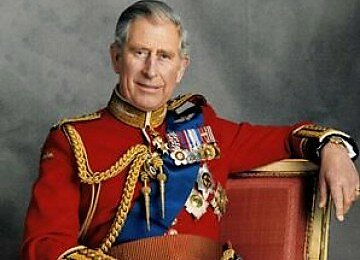
His Royal Highness Prince Charles, who lives, well, like a king, off wealth that his ancestors stole, appears at a Washington Post conference to tell his still-recalcitrant former subjects to change their economic system. As befitting a hereditary aristocrat, coming from a long line of people used to issuing orders, with little interest in spontaneous order or actual economic growth, he finds an
urgent need for … the willingness of all aspects of society — the public, private and NGO [non-governmental organizations] sectors, large corporations and small organizations — to work together to build an economic model built upon resilience and diversity.
Sure thing, guv’nor, we’ll get right on that.
Related Tags
Florida Governor Rick Scott deserves a big round of applause for dealing a major setback to the Obama administration’s costly plan for a national system of high-speed rail. As Randal O’Toole explains, the administration needed Florida to keep the $2.4 billion it was awarded to build a high-speed Orlando-to-Tampa line in order to build “momentum” for its plan. Instead, Scott put the interests of his taxpayers first and told the administration “no thanks.”
That’s the good news.
The bad news is that the administration is going to dole the money back out to 22 passenger-rail projects in other states. Florida taxpayers were spared their state’s share of maintaining the line, but they’re still going to be forced to help foot the bill for passenger-rail projects in other states.
Here’s Randal’s summary:
Instead, the Department of Transportation gave nearly $1 billion of the $2.4 billion to Amtrak and states in the Northeast Corridor to replace worn out infrastructure and slightly speed up trains in that corridor, as well as connecting routes such as New Haven to Hartford and New York to Albany. Most of the rest of the money went to Midwestern states—Illinois, Iowa, Minnesota, Michigan, and Missouri—to buy new trains, improve stations, and do engineering studies of a few corridors such as the vital Minneapolis-to-Duluth corridor. Trains going an average of 57 mph instead of 52 mph are not going to inspire the public to spend $53 billion more on high-speed rail.
The administration did give California $300 million for its high-speed rail program. But, with that grant, the state still has only about 10 percent of the $65 billion estimated cost of a San Francisco-to-Los Angeles line, and there is no more money in the till. If the $300 million is ever spent, it will be for a 220-mph train to nowhere in California’s Central Valley.
Why should Floridians be taxed by the federal government to pay for passenger-rail in the northeast? If the states in the Northeast Corridor want to pick up the subsidy tab from the federal government, go for it. (I argue in a Cato essay on Amtrak that if the Northeast Corridor possesses the population density to support passenger-rail then it should just be privatized.)
I don’t know if taxpayers in Northeast Corridor would want to pick up the federal government’s share of the subsidies, but I’m pretty sure California taxpayers wouldn’t be interested in footing the entire $65 billion for their state’s high-speed boondoggle-in-the-works. As I’ve discussed before, the agitators for a national system of high-speed rail know this:
If California’s beleaguered taxpayers were asked to bear the full cost of financing HSR in their state, they would likely reject it. High-speed rail proponents know this, which is why they agitate to foist a big chunk of the burden onto federal taxpayers. The proponents pretend that HSR rail is in “the national interest,” but as a Cato essay on high-speed rail explains, “high-speed rail would not likely capture more than about 1 percent of the nation’s market for passenger travel.”
According to the Wall Street Journal, congressional Republicans aren’t happy that the administration is taking Florida’s money and spreading it around the country:
Monday’s announcement drew criticism from House Republican leaders, who questioned both the decision to divide the money into nearly two-dozen grants around the country—instead of concentrating it into fewer major projects—and the fact that many of the projects will benefit Amtrak, the federally subsidized passenger-rail operator.
I heartily agree with the Amtrak complaint, but I’m not sure why as a federal taxpayer I should feel better about instead “concentrating [the money] into fewer major projects.” Subsidizing passenger-rail is no more a proper role of the federal government than education or housing. Unfortunately, for all the criticisms of the Obama administrations and the constant talk about spending cuts, Republicans don’t appear to possess much more desire to limit the scope of the federal government’s activities than the Democrats.
See this Cato essay for more on fiscal federalism.