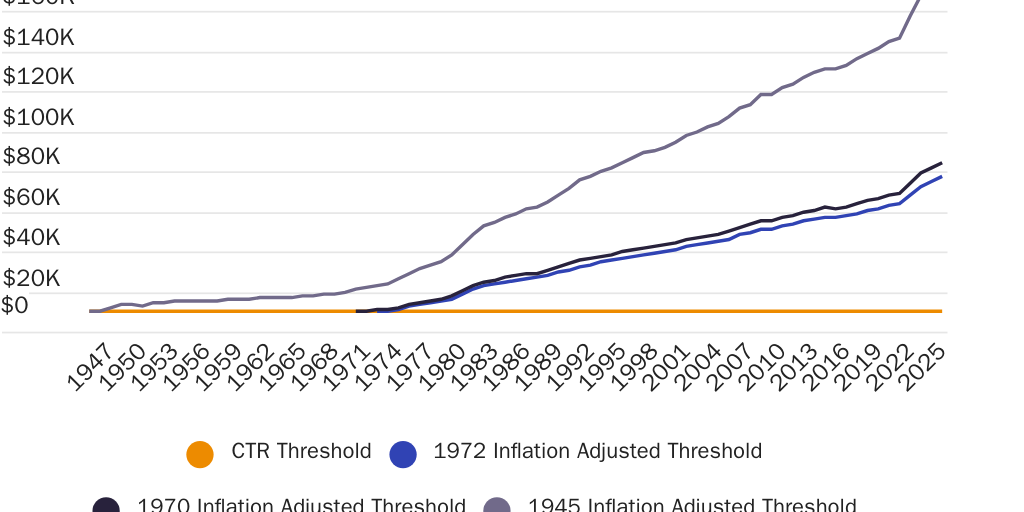
The Securities and Exchange Commission (SEC) has proposed ending quarterly reporting and allowing public companies to submit financial reports on a semiannual basis. This proposal has been a long time coming. Last September, President Trump announced his disdain for quarterly reporting on Truth Social, with SEC Chairman Paul Atkins quickly seconding the president’s vision.
Both the president and the chairman share the same vision for quarterly reporting mandates (ending them), though not the same reasoning. Trump calls for semiannual reporting to reduce short-termism—executives’ pursuit of short-term results over long-term financial health. Atkins, on the other hand, stands on the more principled case that the SEC’s rules have “prevented companies and their investors from determining for themselves the interim reporting frequency that best serves their business needs.”
Does Quarterly Reporting Cause Short-Termism?
While short-termism is a politically convenient justification for reducing reporting mandates, the empirical case for short-termism rests on shaky ground. For starters, US financial markets and corporate investment (research and development) have grown significantly since the modern introduction of quarterly reporting in 1970. Although that relationship is surely overly simplistic, a 2018 review of the empirical literature finds that the macro predictions of the short-termism hypothesis are “largely undemonstrated, implausible, or untrue.” Even the proof most commonly cited as evidence of short-termism—share repurchases—fails to support the cause. Recent work by Harvard’s Elliot Tobin and Charles Wang, for example, finds that, across 17 countries, legalizing buybacks is followed by an 8 to 10 percent rise in corporate investment, not a decline.
It is also somewhat surprising that the administration would rest on short-termism as the reasoning for reducing reporting mandates. Some lawmakers have used short-termism to justify increased government oversight, enhanced reporting mandates, and even higher taxes.
Nevertheless, the record against short-termism does not undermine the case for reducing reporting mandates.
Should the SEC Even Set the Frequency?
Chairman Atkins, in his statement accompanying the release, framed the proposal to move to semiannual reporting as restoring self-determination. In other words, if companies and investors wish to report quarterly, they should be allowed to. And if they wish to report semiannually instead, they should be allowed to do so. That argument follows the right principle.
However, this principle extends beyond the proposal. Disclosure has historically arisen from self-interest, exchange listing rules, or statute. Before Congress wrote interim-reporting authority into Section 13(a) of the Securities Exchange Act of 1934, it was already common for companies listed on the New York Stock Exchange to report quarterly (albeit the content of financial reports was quite different).
More recently, the United Kingdom’s experience supports letting financial markets calibrate themselves. The UK mandated quarterly reporting in 2007, then dropped the mandate in 2014. Roughly 91 percent of UK firms continued to report quarterly through the end of 2015. By 2017, about 40 percent of Financial Times Stock Exchange 100 firms had moved to semiannual. And what happened? Well…nothing. A Goldman Sachs report found that reporting frequency had no impact on valuations.
But reporting frequency has impacted costs. The SEC’s own economic analysis estimates that reporting semiannually would save a company roughly $198,000 per year. And those savings won’t fall evenly, as the SEC also finds that “smaller issuers may face relatively higher compliance burdens” that scale poorly with revenue.
Where the Debate Should Go
Quarterly reporting hasn’t produced the short-termism President Trump has claimed. The SEC’s own analysis shows quarterly reporting adds significant costs for no measurable benefit, and evidence from the UK reveals that giving companies more freedom to choose didn’t affect company valuations. Yet even with this evidence, short-termism remains a political scapegoat.
To their credit, Chairman Atkins and the SEC have taken a principled approach. Rather than debating whether short-termism is real, the proposal rests on the principle that reporting frequency is a question companies and investors should answer for themselves. Atkins is correct: How often a company reports to its investors should be a decision between the company and its investors, not the government.