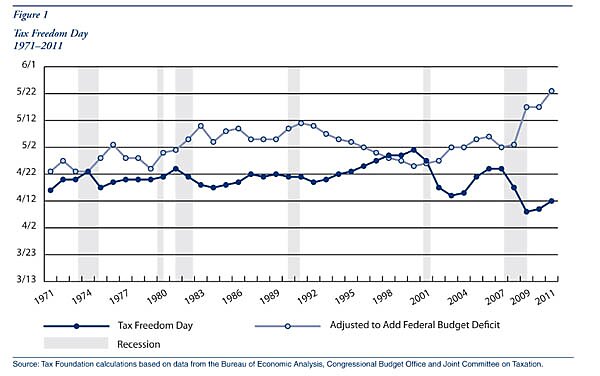
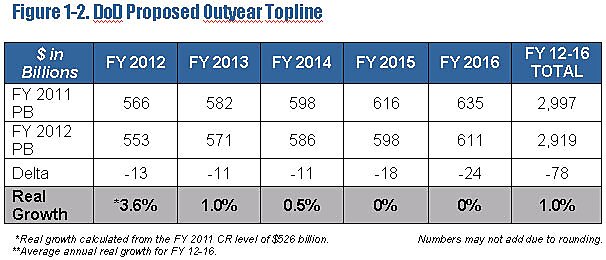
- How can we have an “adult conversation” on the budget if the White House won’t release its budget and deficit projections to the public?
- A new guide to India’s uneven spread of economic freedom could help state-level policymakers there improve the welfare of citizens there.
- “When the Cato guy tells you someone is corrupting the idea of HSAs, pay attention.”
- Despite having the bully pulpit, and despite touting opinion polls in favor of reform, the Obama administration finds it necessary to use taxpayer funds to tell Googlers what’s best for them.
- Indiana Governor Mitch Daniels has doubled down on the social issues truce–Cato’s John Samples talked about this on Friday on the Cato Daily Podcast:
Cato at Liberty
Cato at Liberty
Topics
Tax-consumers Use Our Money to Lobby for More of Our Money
I have two items published today about how governments and other tax-consumers use taxpayer dollars to lobby the government to get more taxpayer dollars. Politico Arena asks, “Will the public warm up to the health care law?” My reply:
I’m amused — at best — that the vast United States government is using my tax dollars to try to persuade voters that the signature legislative accomplishment of the president’s term is actually a good idea. Search Google for the term “Obamacare,” and the first paid link is for healthcare.gov, a government propaganda site for the Affordable Care Act. They’re also using Medicare.gov that way. And roping in poor old Andy Griffith for a TV ad that Factcheck.org says uses “weasel words” to “mislead” seniors.
Health and Human Services Secretary Kathleen Sebelius said the administration had a “lot of reeducation to do.” If administration officials were confident that their health care scheme was a good idea, they wouldn’t need to spend tax dollars — in a year when the deficit exceeds $1.5 trillion — to try to sell it to the citizens. And this raises a real question for democratic governance: Are the people supposed to tell policymakers what policies they want, or should policymakers use the people’s money to tell them what they should want?
Meanwhile, at the Britannica Blog I cite other examples of tax-funded lobbying:
Between broadcasts of “Downton Abbey” and “Frontline,” PBS viewers are implored to call their congressman and keep the money flowing. Public radio websites blare “Protect KCRW, Write your representative, write your senator.” Announcements on the radio carry the same message.…
My colleague Richard Rahn complains, “Taxpayer dollars are also used to fund international organizations, which, in turn, lobby the U.S. Congress for not only more money for themselves, but also for higher taxes on the American people.”…
The Hill newspaper reported in 2009, “Auto companies and eight of the country’s biggest banks that received tens of billions of dollars in federal bailout money spent more than $20 million on lobbying Washington lawmakers in the first half of this year.” Later in the year the Huffington Post found, “Twenty-five top recipients of government bailout funds spent more than $71 million on lobbying in the year since they were rescued.”
And I ask:
Lobbying is constitutionally protected. The First Amendment guarantees not just freedom of speech and of the press but also “the right of the people…to petition the Government for a redress of grievances.” But does that mean the government itself has a right to petition itself for a piece of the pie?
Related Tags
Mitch Daniels and ObamaCare, Round Two
In a March 4 article for National Review Online titled, “Mitch Daniels’s Obamacare Problem,” I explain how Indiana Gov. Mitch Daniels (R) is undermining the effort to repeal ObamaCare, and how he might do even more damage to that movement as the Republican nominee for president. My article came under fire from Daniels’ policy director Lawren Mills (in the comments section of my article), Grace-Marie Turner of the Galen Institute, and Bob Goldberg of the Center for Medicine in the Public Interest.
Today, NRO runs my response. An excerpt:
In brief, the trio believes that Daniels’s expansion of government-run health care is a conservative triumph. I can’t believe we’re even having this conversation…
Daniels has an ObamaCare problem that could hurt the repeal movement if he doesn’t deal with it. Turner is creating more ObamaCare problems. This isn’t the first time conservatives have danced with the devil on health-care questions (see Massachusetts), but with health-care freedom now at its moment of maximum peril, that needs to stop. It will probably, however, take more than just the usual voices of protest to stop it. Tea Party and traditional conservative groups should perhaps spend less time attacking congressional Republicans over relatively minor tactical disagreements, and more time educating the governors, state legislators, and (yes) policy wonks who are actively implementing ObamaCare in their own backyards.
I’ll be speaking tonight at a Capitol Hill event sponsored by the Galen Institute (among others).
Related Tags
Mitch Daniels and That Social Issues ‘Truce’
Washington Post blogger Jennifer Rubin is surprisingly alone as a conservative beating up on Gov. Mitch Daniels this week for his reiterated call for a “truce” on social issues while the country confronts the “new Red Menace” of deficits and debt. The Post’s “Fix” reports the latest:
In a new interview for the online television program “Uncommon Knowledge with Peter Robinson”, Daniels expands on the idea he first laid out in a profile for the Weekly Standard that economic issues — and the debt in particular — should take precedence over social issues.
“If you don’t believe that the American public is mortally threatened — as I do — by this one overriding problem we have built for ourselves, then of course I’m wrong,” Daniels told Robinson in an excerpt of the interview, which is set to air on Monday. “All I was saying was, we’re going to need to unify all kinds of people, and we’re going — freedom is going — to need every friend it can get.”
The NBC-Wall Street Journal poll finds that Republican voters like the idea of focusing on fiscal issues.
Meanwhile, look at the letters in Saturday’s Wall Street Journal in response to the article “Americans Don’t Want a ‘Truce’ on Social Issues” by Richard Land of the Southern Baptist Convention. Every one of them defends Daniels, in language like this:
“Man cannot live on bread alone, but man cannot live if the monetary and fiscal structure of the nation collapses on top of him.”
“Mr. Land’s statement that, ‘Most social conservatives are also fiscal conservatives’ did not seem to be in effect during the George W. Bush administration and the Republican Congress. Those social conservatives significantly increased the size of our government and our debt.”
“What Mr. Land fails to understand is that most fiscal conservatives in the 50 states are social moderates.”
“I congratulate Gov. Daniels for having the courage to acknowledge that there is only so much government can do—a welcome confession to Christians who believe that absolute certainty in one’s own correctness is less an expression of profound faith than human hubris.”
On Friday’s Cato Daily Podcast, John Samples discusses Mitch Daniels and the changing politics of social issues.
Related Tags
Pielke’s Problem
I generally admire the work of Roger Pielke Jr., a political scientist in the University of Colorado-Boulder’s Center for Science and Technology Policy Research. His new book on climate change is refreshingly honest and non-ideological, if a bit overly technophilic. His broader work offers the important insight that science alone cannot direct public policy, but rather it can only lay out possible results of different policy choices.
Given the quality of his work, I was disappointed by Pielke’s op-ed in today’s NYT defending Congress’s legislated obsolescence of the incandescent light bulb. He argues that government standard-setting is an important contribution to human welfare, and the light bulb standard is just part of that standard-setting (though he does suggest some minor policy tweaks to allow limited future availability of incandescents).
To justify his argument, Pielke points out the great benefit of government-established standard measures, as well as quality standards:
Indeed, [in the United States of the late 19th century] the lack of standards for everything from weights and measures to electricity — even the gallon, for example, had eight definitions — threatened to overwhelm industry and consumers with a confusing array of incompatible choices.
This wasn’t the case everywhere. Germany’s standards agency, established in 1887, was busy setting rules for everything from the content of dyes to the process for making porcelain; other European countries soon followed suit. Higher-quality products, in turn, helped the growth in Germany’s trade exceed that of the United States in the 1890s.
America finally got its act together in 1894, when Congress standardized the meaning of what are today common scientific measures, including the ohm, the volt, the watt and the henry, in line with international metrics. And, in 1901, the United States became the last major economic power to establish an agency to set technological standards.
Alas, this argument doesn’t support Pielke’s light bulb standard.
The weights-and-measures and product standards that he cites are examples of government response to market failures—instances where private action is unable to reach efficient results. Concerning weights and measures, a type of market failure known as the collective action problem can make it difficult to establish standard measures privately. Getting everyone to agree can be like herding cats, and there is ample incentive to secretly defect from that standard — e.g., a gas station would love to sell you a 120-ounce “gallon” that you assume is a standard 128 ounces. (OTOH, there are plenty of examples of private action overcoming this problem, such as the standardization of railroad track gauges in the late 19th century.) Likewise, quality standards can be understood as a response to a kind of market failure known as the information asymmetry problem— e.g., a producer of low-quality goods may knowingly try to pass them off as high-quality goods. (Again, there are plenty of examples of private action overcoming this problem.)
As libertarians, we recognize that there are market failures, and that government can sometimes mitigate them. (That’s why we’re not anarchists.) Also as libertarians, we recognize that government intervention can result in outcomes even less efficient than the original market failure. (That’s why we’re not run-of-the-mill Democrats or Republicans.)
But where is the market failure with incandescent bulbs? After nearly 125 years of use, people know the drawbacks and advantages of incandescents—that they use more electricity than other types of bulbs and have a shorter lifespan, but they cost very little and work much better in certain applications—from dimmer switches to Easy-Bake Ovens—than other bulbs. Besides, CFL bulbs were widely available before Congress’s 2007 legislation, and LED lights were already in the R&D pipeline.
Perhaps Pielke would argue that there is a market failure with incandescents: the negative externality of air pollution, including greenhouse gas emissions. But incandescent lighting is only one of many, many electricity-using devices, and electricity generation is just one of many, many sources of air pollution. So why the focus on just this one externality source instead of advocating a policy that broadly addresses emissions? And why devote his op-ed to discussing technology standards, and make no mention of air pollution?
Related Tags
This Week in Government Failure
Over at Downsizing the Federal Government, we focused on the following issues this week:
- A new Cato video puts $61 billion in spending cuts in perspective.
- Republicans and Democrats are arguing over the 17 percent of the federal budget known as nondefense discretionary spending. We take a look at what constitutes that spending.
- Merely capping federal spending growth at 3 percent a year would get the budget under control without having to raise taxes.
- A look at what has caused the U.S. Department of Agriculture’s budget to boom.
- Alleged devotees of a more limited government often waste their time on quixotic moral crusades to “make government more efficient.” In doing so, they’re really just playing into the hands of those that want big government. They’re also helping lead citizens to believe that our budget problems can be solved with just a little house cleaning.
Follow Downsizing the Federal Government on Twitter (@DownsizeTheFeds) and connect with us on Facebook.
Related Tags
NPR — A New Target for Harkin?
Secret recordings apparently revealing rampant dirty dealing. Big headlines. Taxpayer dollars wrapped up in it all. Surely all this ugliness — even if it turns out that the reality isn’t nearly as bad as inital reports make it sound — is coming from the favorite target of Senator Tom Harkin (D‑IA), evil for-profit colleges!
Nope. It’s National Public Radio. And I assume Harkin and his pals will give NPR the exact same over-the-coals treatment they’ve been giving for-profit schools.
OK, I’m probably not able to assume that at all — but I should be.