Heh, great photoshop work from the folks at the Voice for School Choice in SC.
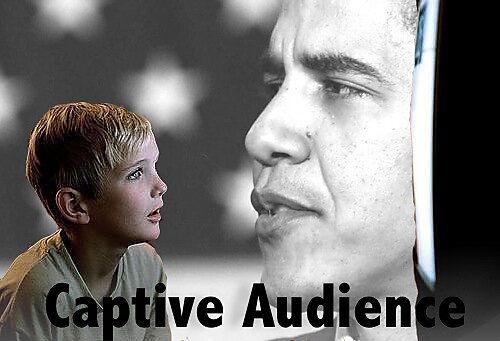
Heh, great photoshop work from the folks at the Voice for School Choice in SC.
The Houston District Attorney’s office has apparently sent out this notice:
Schools: If you have any information on someone who is attending a Houston County public school who either resides out of Houston County or out of their zone, please give us as much information as possible. Your contact information is not required; but, we will contact you if you desire. You may call 478.—.—- and leave a message or use our form below. All information provided is confidential.
Apple wants to sell more iPods. Facebook wants to sign up more members. In the free enterprise system, the incentives are aligned so that what’s good for consumers (access to things they want) is also good for producers. Not so in public schooling. Good public schools can’t get paid for serving kids outside their catchment area, so when folks try to escape lousy local schools by sneaking their kids into better ones, it actually hurts the better schools financially. So, rather than encouraging good schools to grow and take over bad ones, the status quo encourages good schools to stay as small as they can, and serve as few kids as they can. Great, huh?
Can we break up the monopoly now? Please?
As Neal and Andrew have already covered extensively, President Obama is set to address the nation’s school children, and the Secretary of Education has sent out marching orders to government teachers and lesson plans for the kids.
The administration has now backpedaled from a classic political gaffe and cleaned up the most offensive aspects; asking kids to write about how they can help, explain why its important to listen to political leaders, etc.
But I think a couple of points deserve repeating.
From a push for vastly expanding federal involvement in preschool and early education to home visitations in the health care bills, the government remains intent on expanding its dominion (And hot on the heels of President Bush’s massive expansion of federal involvement in schools).
But this problem didn’t begin with Obama and won’t end with him. Politics in the schools is what we get when the government runs our schools.
Don’t want your kids indoctrinated by government bureaucrats, special interests, or the President?
Private school choice is the only remedy, and education tax credits are the increasingly popular and successful way to deliver it.
When will a critical mass of the people realize that it is dangerous and destructive to allow the government to control the education of our children and finally do something about it?
* Captain Louis Renault reference
NRO points out that, after criticism from pundits and the blogosphere, the Obama administration has revised its suggested curriculum activities tied to his speech to schoolchildren next Tuesday. Originally, the Department of Education’s “Menu of Activities” recommended that elementary school children “write letters to themselves about what they can do to help the president.” The new guidance suggests that students should write letters about realizing their own education goals.
It’s a relief to see the administration redress the Orwellian undertone of its original curriculum guidance. But the real problem isn’t what the president or the education department have to SAY. The problem is what they are actually doing.
If the president really wants to improve academic achievement and raise graduation rates, why did he kill the federal private school choice program in Washington DC? His own education department reports that this program significantly raises students’ academic achievement, and it’s doing so at one quarter the cost of the city’s public schools. Several scientific studies also show that private schools significantly raise the high school graduation rate over the level of public schools, especially for inner-city African American students who are at a high risk of dropping out. And that holds true even when the public and private school students being compared come from similar families.
Instead of just telling kids to get good grades and stay in school, president Obama should support policies that are proven to achieve those goals. Actions speak louder than words, Mr. president.
Since Neal McCluskey and I weighed in on the president’s planned address to public school students this morning, we’ve been getting a whole lot of calls and e‑mails from parents who aren’t too keen on the prospect. They’ve been asking us how to let their school districts know that they don’t feel comfortable with the president as “Educator in Chief.”
If you’re in the same boat, here’s how to contact your district officials and (politely, of course) voice your opinion. Go to this school district search page at the Department of Education and type in the name of your district and the state that it’s in. Click the button and it will display your district’s telephone number.
I’m sure the president would approve of helping parents to become more actively involved in their own children’s education.
Michelle Malkin beat me to this story, but it bears repeating. So too does the accompanying video, especially at about the 3:15 mark. This is almost certainly not analogous to what the president will ask for in his address to students, but as you read the guidance given to schools by the U.S. Department of Education, it seems a heck of a lot closer than anyone should ever be comfortable with.
It’s one thing for a president to encourage kids to work hard and stay in school – that’s a reasonable use of the bully pulpit. It’s another thing entirely, however, to have the U.S. Department of Education send detailed instructions to schools nationwide on how to glorify the president and presidency, and prod schools to drive social change. Yet as Andrew Coulson has already begun to discuss, the latter is what President Obama, audaciously, has done.
This is, of course, a very troubling turn of events, giving rise to very legitimate fears of political and social indoctrination even if it turns out that those aren’t at all the President’s motives. Perhaps, though, this is also a blessing in disguise. As many liberals and conservatives push for national academic standards and other centralizing education reforms, this situation brilliantly illustrates why government schooling is totally antithetical to a free society, and why the more centralized the power, the greater the danger.
Some background: In anticipation of the president’s planned September 8 address to students nationwide, Secretary of Education Arne Duncan sent a letter and detailed “classroom activities” with all sorts of alarming buzzwords and guidance to schools across the country. In his letter, Duncan asserts that the work of educators is “critical to…our social progress.” It’s a statement that suggests – as many educators have held and continue to hold – that it is the job of public schools to impose values, often collectivist, on students. Fear that this might be the case is reinforced by suggested classroom activities in the department’s guidance for pre-K‑6 students that encourage children to make posters setting out “community and country” goals. Perhaps even more frightening is the lesson being pushed that it is important to listen to “the President and other elected officials.” Possibly most distressing of all, though, is guidance that appears explicitly designed to glorify both the presidency and President Obama himself, encouraging schools to prepare for the speech “by reading books about presidents and Barack Obama.” Finally, schools are told to ask students how president Obama will “inspire” them in his speech before he gives it, and how they were inspired after Obama has spoken.
This is very disturbing, making crystal clear the huge dangers that attend government-controlled education. Ultimately, politicians will use power over education for their own ends, something fully at odds with a free society. And this is just the most stark manifestation of the inherent incompatibility of freedom and government education. As I have emphasized constantly since publication of my paper Why We Fight: How Public Schools Cause Social Conflict, every day free people are pitted against one another, forced to defend their freedom and basic values because they all have to support a single system of government schools. Evolution vs. creationism. Prayer in – or not in – schools. Books with offensive material in libraries. Decisions over whose history will be taught, and whose won’t. The curtailment of freedom goes on and on when government takes everyone’s money and provides schools with it. And the more we centralize education – the more diverse people we force to support one system of schools – the greater the cost to liberty.
All of which makes one thing obvious: The only system of learning compatible with a truly free society is not one of government domination, but one rooted in educational choice – public education, not schooling – in which the public assures that all people can access education, but parents are free to choose their children’s schools and educators are free to educate how they wish.
For too long we have ignored freedom when it’s come to education, sacrificing liberty for “test scores” or “efficiency.” As a result, we’ve gotten neither good test scores nor efficiency while fomenting constant social conflict and building increasingly dangerous government control over our children and our lives. But hopefully some good will come of this troubling Obama administration initiative, issuing a desperately needed wakeup call to all Americans about the great damage government education can inflict on otherwise free people.