This morning, vice president and presumptive Democratic presidential nominee Kamala Harris is scheduled to speak to the national convention of the American Federation of Teachers, the country’s second-largest teachers union. She will almost certainly talk about raising teacher pay, perhaps harkening back to her 2020 presidential campaign proposal to have the federal government fund roughly $13,500 per-teacher raises.
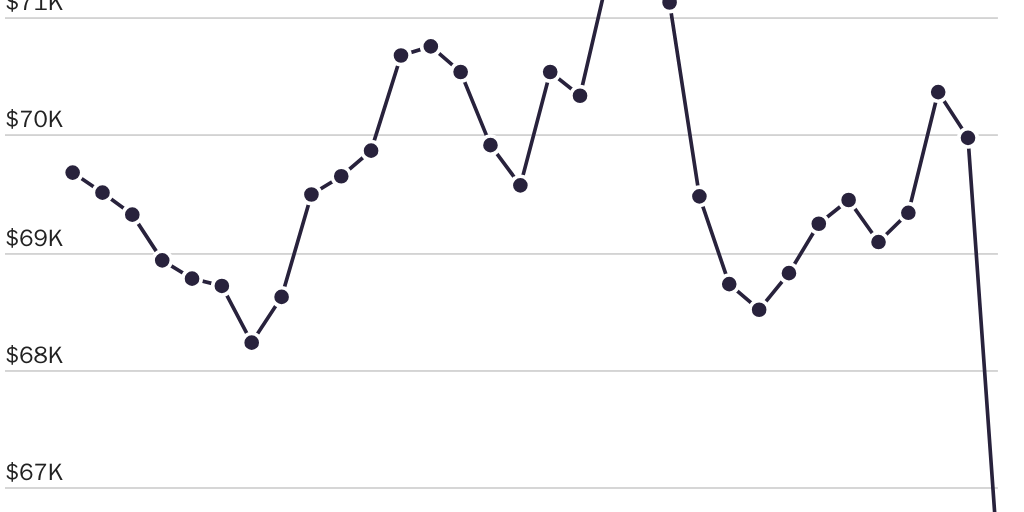
If Harris mentions that teacher pay has been stagnant for decades, she is right. As seen in Figure 1, since 1990 inflation-adjusted salaries have been essentially flat, hovering between $69,000 and $70,000, with a big dip recently.
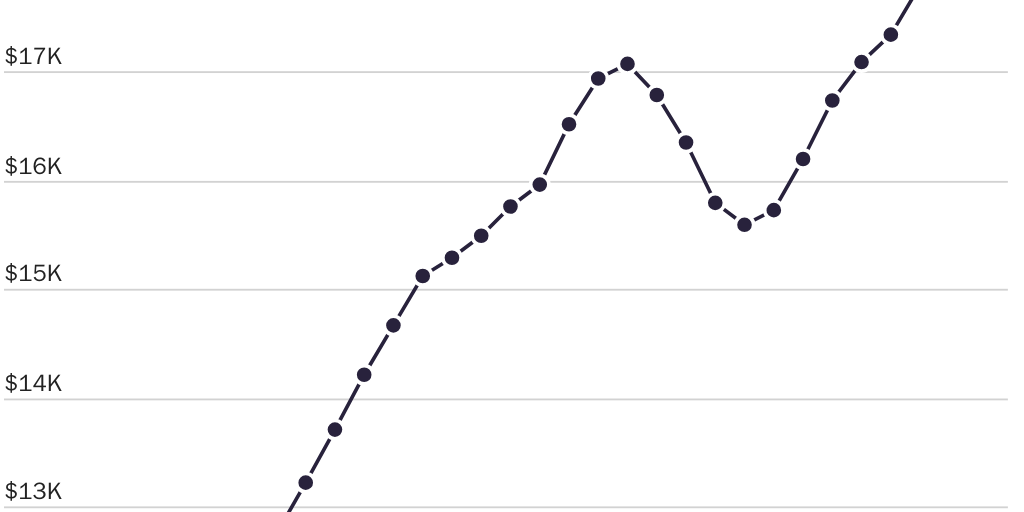
There is a good chance that an explanation for this that will be offered at the convention is spending cuts to public schools. But as Figure 2 shows, that has not been the case. Inflation-adjusted spending per-pupil has risen pretty steadily, from $12,272 in the 1990–91 school year to $18,614 in 2020–21. Meanwhile, real total spending rose from around $513 billion in 1990–91 to almost $927 billion in 2020–21.
Where is the money going? One place to look is total public school employees (Figure 3).
The number of teachers as a share of all employees has decreased considerably since 1990, from 53.4 percent to 47.5 percent. The employment increases have come especially in instructional aids, which rose from 8.8 percent of all employees to 13.3 percent.
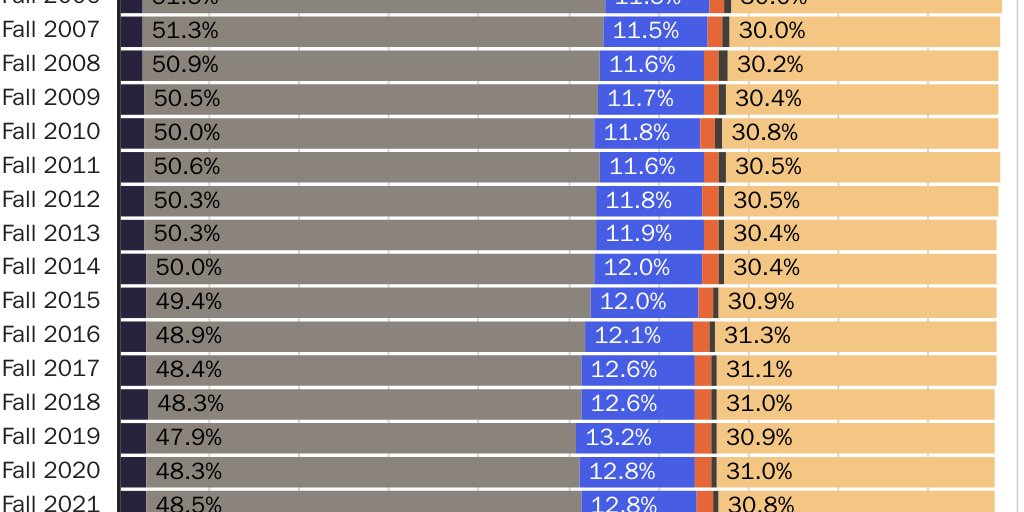
There are also simply more employees. In the fall of 1990, public schools employed 4.5 million people, or 9.2 students per employee. In fall 2022, it was 6.8 million, or just 7.3 students per employee.
So why are public school teachers not getting paid better? At least in part, because public schools have chosen the path of hiring more people, and smaller shares of them teachers, rather than paying teachers more.
That is not something the federal government, which has no constitutional authority to govern in education anyway, should be encouraging.
